Cost of Poor Quality (COPQ) Reduction
Reducing the Cost of Poor Quality (COPQ) and minimizing rejections in automotive manufacturing requires a structured approach that integrates process improvements and quality control measures. Our comprehensive COPQ reduction services leverage industry-proven methodologies to identify cost drivers, eliminate waste, and significantly improve your bottom line through systematic quality enhancement.
Understanding the Cost of Poor Quality
Visible and Hidden Quality Cost Components
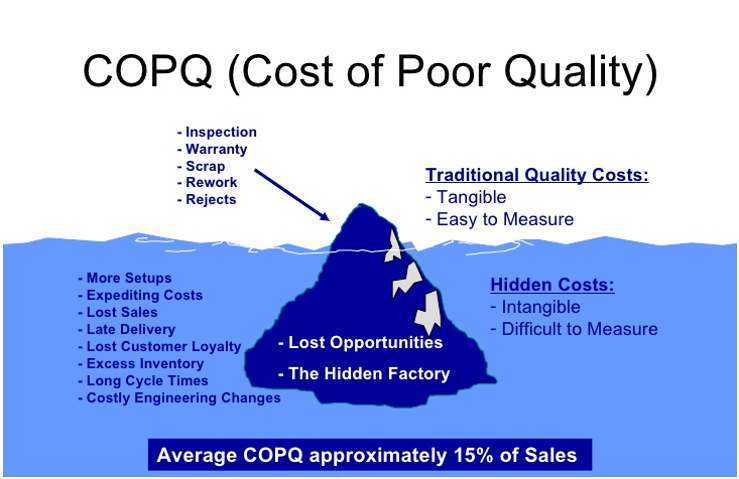
Average COPQ approximately 15% of Sales - Understanding visible and hidden quality costs
Traditional Quality Costs
Inspection, warranty claims, scrap, rework, and product rejections. These tangible costs are easy to measure and track in traditional accounting systems.
Hidden Costs (Intangible)
More setups, expediting costs, lost sales, late deliveries, lost customer loyalty, excess inventory, long cycle times, and costly engineering changes. These hidden costs often exceed visible costs significantly.
Lost Opportunities
Missed market opportunities, reduced competitive advantage, and inability to invest in innovation due to resources consumed by poor quality issues.
Lean Six Sigma: 8 Wastes Framework
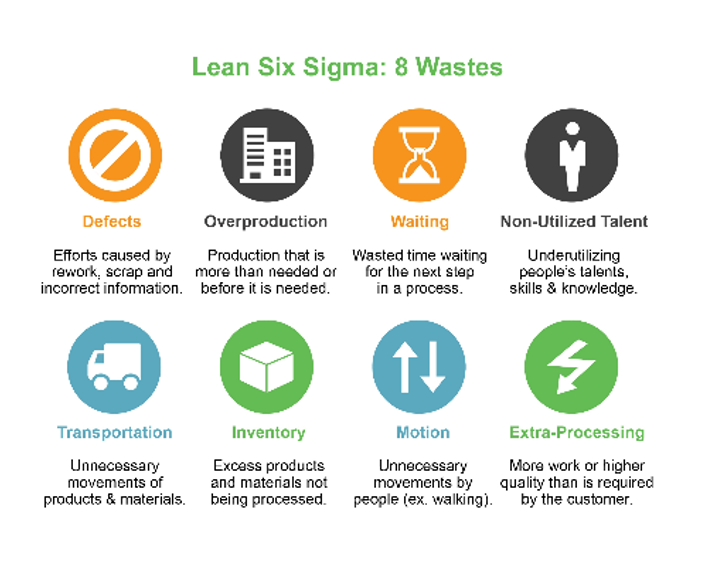
Identifying and eliminating the 8 types of waste in manufacturing processes
Key Strategies for COPQ Reduction
Proven Methodologies & Best Practices
Comprehensive strategies leveraging Lean Six Sigma, supplier management, automation, training, and quality enhancement to systematically reduce cost of poor quality and maximize profitability.
Six Sigma & DMAIC
Defect Reduction Methodology
- DMAIC (Define, Measure, Analyze, Improve, Control)
- Pareto Analysis for root cause identification
- Fishbone Diagrams and statistical analysis
- Defect rate reduction and COPQ optimization
Supplier Quality Management
Supply Chain Excellence
- IATF 16949 compliance audits
- Production Part Approval Process (PPAP)
- Statistical Process Control (SPC) monitoring
- Continuous supplier performance tracking
Process Automation & Digitalization
Technology-Driven Quality
- AI-driven predictive maintenance systems
- IoT sensors for real-time monitoring
- Automated defect detection systems
- Error minimization and consistency improvement
Employee Training & Engagement
Workforce Development
- Quality awareness culture programs
- 8D Methodology problem-solving training
- Cross-functional collaboration initiatives
- Continuous improvement engagement programs
Testing & Inspection Enhancement
Quality Control Advancement
- Non-destructive testing (NDT) implementation
- Automated vision systems deployment
- FMEA (Failure Mode & Effects Analysis)
- Proactive risk mitigation
Lean Manufacturing Principles
Waste Elimination & Value
- 8 Wastes framework elimination
- Value stream mapping optimization
- Kaizen continuous improvement culture
- Process efficiency and cost reduction
The Eight Wastes of Lean Manufacturing
Identify & Eliminate Operational Waste
Defects
Errors caused by rework, scrap, and incorrect information. These directly increase COPQ and customer dissatisfaction.
Overproduction
Production that is more than needed or before it is needed. Creates excess inventory and ties up capital unnecessarily.
Waiting
Wasted time waiting for the next step in a process. Reduces efficiency and extends cycle times unnecessarily.
Non-Utilized Talent
Underutilizing people's talents, skills, and knowledge. Misses opportunities for innovation and improvement.
Transportation
Unnecessary movements of products and materials. Creates delays, damage risk, and additional handling costs.
Inventory
Excess products and materials not being processed. Ties up capital and increases storage costs.
Motion
Unnecessary movements by people (e.g., walking, reaching). Increases fatigue and reduces productivity.
Extra-Processing
More work or higher quality than required by the customer. Wastes resources without adding value.
Benefits of COPQ Reduction
Unlock Profitability & Operational Excellence
Increased Profitability
Direct reduction of quality-related costs can improve profit margins by 15-25% or more, significantly impacting the bottom line.
Improved Efficiency
Reduced rework, scrap, and defects improve operational efficiency and reduce cycle times.
Enhanced Customer Satisfaction
Higher quality products with fewer defects increase customer satisfaction and loyalty.
Reduced Warranty Claims
Fewer defects result in fewer warranty claims, reducing post-sale costs and improving reputation.
Continuous Improvement Culture
Structured improvement methodologies foster a culture of excellence and continuous innovation throughout the organization.
Competitive Advantage
Superior quality and lower costs provide competitive advantage in the marketplace and attract more customers.
Our COPQ Reduction Services
Expert Methodology & Implementation
COPQ Analysis & Assessment
Comprehensive evaluation of your current cost of poor quality, identification of visible and hidden costs, and quantification of financial impact.
DMAIC Implementation
Full Six Sigma DMAIC project execution with expert guidance through Define, Measure, Analyze, Improve, and Control phases.
Root Cause Analysis
Advanced problem-solving using Pareto Analysis, Fishbone Diagrams, 5 Whys, and other analytical tools to identify true root causes.
Training & Capability Building
Employee training in Six Sigma, Lean principles, 8D methodology, and quality awareness to build organizational capability.
Supplier Quality Enhancement
Supplier assessment, PPAP implementation, and SPC monitoring to reduce incoming quality issues and supplier-related COPQ.
KPI Monitoring & Reporting
Establishment of quality metrics, dashboard creation, and regular reporting to track COPQ reduction progress and ROI.
COPQ Reduction Implementation Roadmap
Four-Phase Systematic Approach
Assessment & Baseline
Conduct comprehensive COPQ analysis, identify current state costs, and establish baseline metrics for measurement and tracking.
Root Cause Identification
Perform detailed root cause analysis using Lean Six Sigma tools to identify primary drivers of poor quality and cost.
Solution Development & Implementation
Develop and implement targeted solutions addressing identified root causes, with validation and refinement as needed.
Control & Sustain
Establish controls to prevent regression, implement standard work, and maintain gains through continuous monitoring and improvement.